Call us (786) 7096307
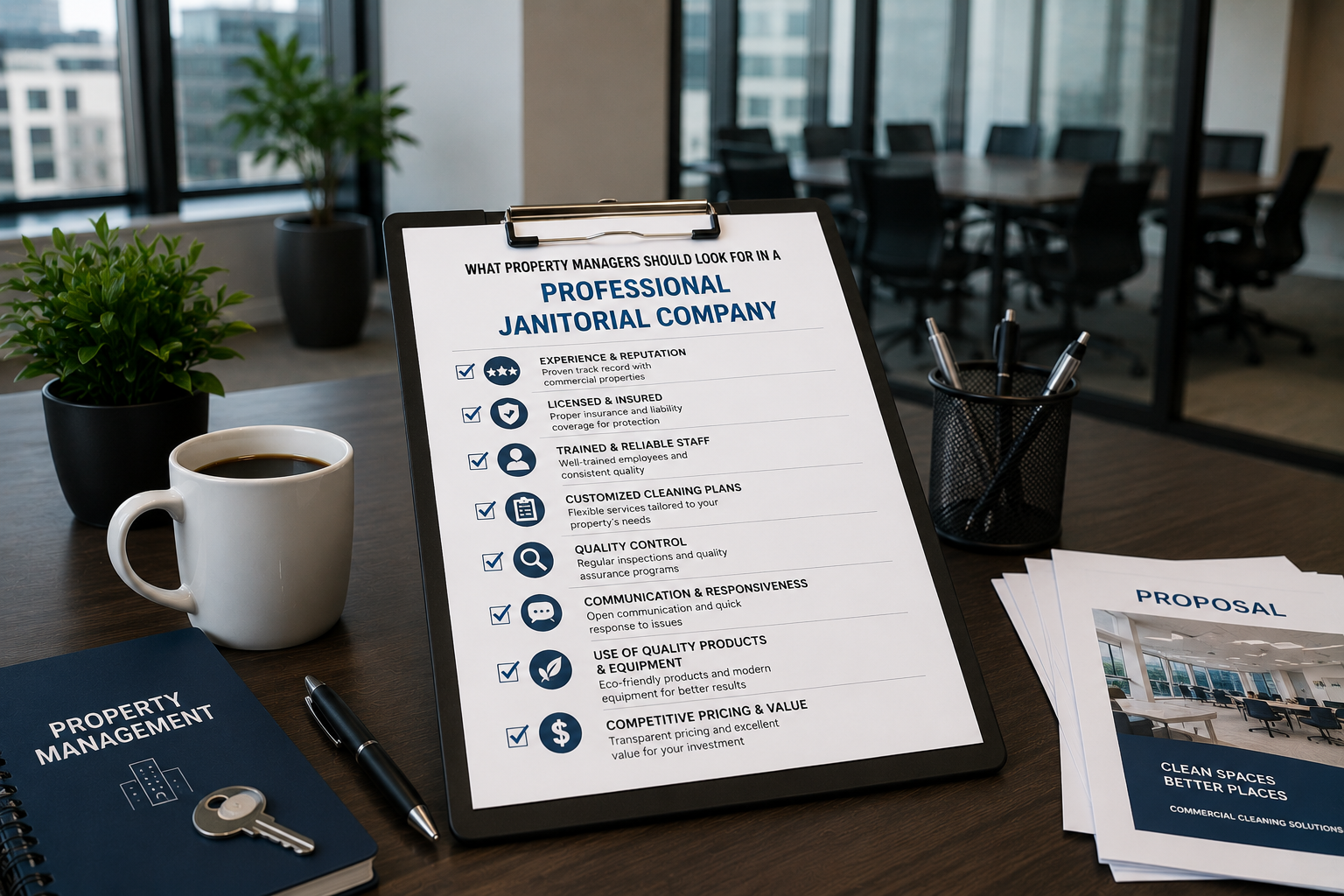
Managing a commercial property involves dozens of responsibilities, and cleaning is one of the services that can quickly become a management problem when it is not handled correctly.
For a property manager, hiring a janitorial company is not simply about finding someone to empty trash cans, vacuum offices, and clean restrooms. The right cleaning provider should help reduce daily management responsibilities, maintain consistent standards, communicate effectively, and understand how a commercial facility operates.
A janitorial company may look good on a proposal, but the real test begins after the contract starts.
So, what should property managers actually look for when selecting a professional janitorial company?
1. Experience With Commercial Facilities
Commercial cleaning is different from residential cleaning.
A professional janitorial company should understand the requirements of commercial properties, including offices, common areas, restrooms, elevators, entrances, breakrooms, high-traffic floors, and shared spaces.
Commercial facilities may also have specific building access procedures, alarm systems, security requirements, restricted areas, and cleaning schedules that must be followed carefully.
Before hiring a company, property managers should determine whether the provider understands these operational requirements—not simply whether they know how to clean.
2. A Cleaning Plan Built Around the Property
One of the first warning signs is a cleaning company that recommends a program before properly understanding the facility.
Every commercial building is different.
The appropriate janitorial schedule depends on factors such as:
Building size
Number of occupants
Daily visitor traffic
Number of restrooms
Flooring materials
Common areas
Operating hours
Tenant requirements
High-traffic zones
Special cleaning priorities
A professional janitorial company should evaluate these factors and develop a cleaning plan based on the actual property.
The goal should not be to sell the largest cleaning package. It should be to determine the right level of service.
3. Clearly Defined Scope of Work
A property manager should know exactly what is included in the janitorial agreement.
General descriptions such as “clean offices” or “maintain restrooms” can create confusion because they leave too much room for interpretation.
A professional scope of work should identify specific responsibilities and frequencies.
For example, instead of simply stating “floor cleaning,” the plan may specify which floors are vacuumed daily, which areas are mopped, and which surfaces require periodic machine maintenance.
The same principle applies to restrooms, kitchens, offices, elevators, entrances, glass, trash removal, and other areas.
If expectations are not clearly defined, quality becomes difficult to measure.
4. Reliability and Consistency
For property managers, consistency may be more important than almost anything else.
A cleaning company can perform excellent work one night and still become a problem if the quality changes constantly from one visit to another.
Property managers should look for a janitorial provider with systems that support consistent service.
That includes employee training, cleaning procedures, schedules, checklists, supervision, and accountability.
The objective is simple: management should not have to inspect every trash can, restroom, or hallway every morning to determine whether the cleaning was completed.
A reliable janitorial company should reduce management workload—not create another task for the property manager.
5. Supervision and Quality Control
Even experienced cleaning employees need supervision.
Commercial properties are dynamic environments. Areas become busier, tenant needs change, employees make mistakes, and unexpected situations occur.
A professional janitorial company should have a process for identifying and correcting problems.
Property managers should ask:
Who supervises the cleaning team?
How is quality checked?
What happens when a task is missed?
Who should management contact when there is a problem?
How quickly are service issues addressed?
The answers to these questions can reveal much more about a cleaning company than a long list of services.
6. Communication That Actually Works
Communication is one of the most underestimated parts of commercial cleaning.
When a cleaning problem occurs, property managers should not have to contact several people before finding someone who can help.
There should be a clear communication channel between the property and the janitorial provider.
Good communication also works in both directions.
A cleaning team may notice a leaking restroom fixture, unusual floor damage, a broken dispenser, excessive trash, or another condition that management should know about.
While cleaners are not building maintenance technicians, reporting unusual conditions can help property managers identify problems earlier.
A janitorial company should function as an attentive service partner inside the property.
7. Proper Insurance and Professional Business Practices
Before allowing a cleaning company to work inside a commercial facility, property managers should verify appropriate insurance and business documentation based on the requirements of the property and contract.
The specific insurance requirements may vary depending on the facility and scope of work.
Property managers should also discuss building access, keys, alarm codes, restricted areas, incident reporting, and other security procedures before service begins.
These details become especially important when janitorial teams work after business hours.
Price matters, but professional risk management matters too.
8. Employee Training and Building Security
Janitorial employees often work inside facilities when few or no client employees are present.
They may have access to offices, conference rooms, common areas, and other important spaces.
For this reason, property managers should understand how the cleaning company manages its employees and building access.
Cleaning personnel should know which areas they are authorized to enter, how keys or access cards should be handled, which doors must remain locked, and what procedures should be followed when leaving the property.
Training should also cover cleaning methods, equipment, chemical handling, safety procedures, and professional conduct.
9. Ability to Handle High-Traffic Areas
Not every part of a commercial building requires the same cleaning frequency.
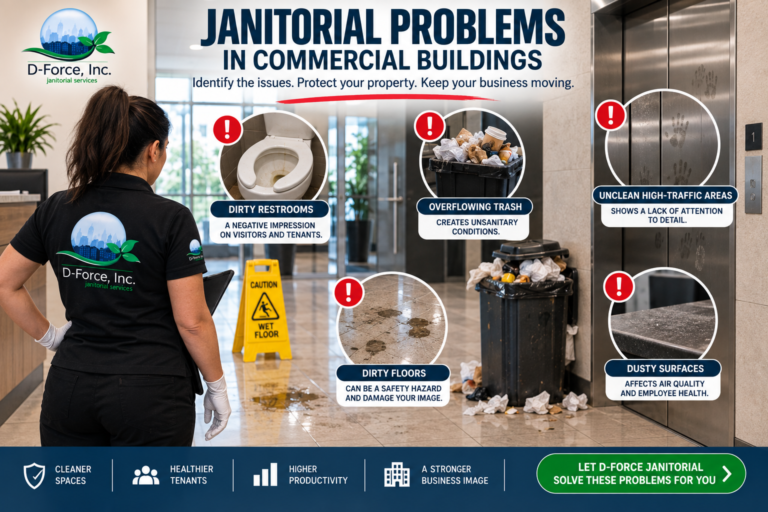
Entrances, lobbies, elevators, restrooms, kitchens, and main hallways often need more attention than private offices or low-traffic areas.
A professional janitorial company should recognize these differences.
Instead of distributing cleaning time equally throughout the property, the cleaning schedule should prioritize areas based on actual usage.
This is especially important in multi-tenant and high-traffic commercial buildings.
Cleaning frequency should follow the building’s traffic patterns—not simply its square footage.
10. Day Porter and Nightly Janitorial Options
Some commercial properties need more than traditional nighttime cleaning.
A busy building may look excellent at 8:00 AM but require attention again by noon.
Restrooms need supplies. Entrance glass develops fingerprints. Trash accumulates. Elevators receive constant traffic. Spills happen.
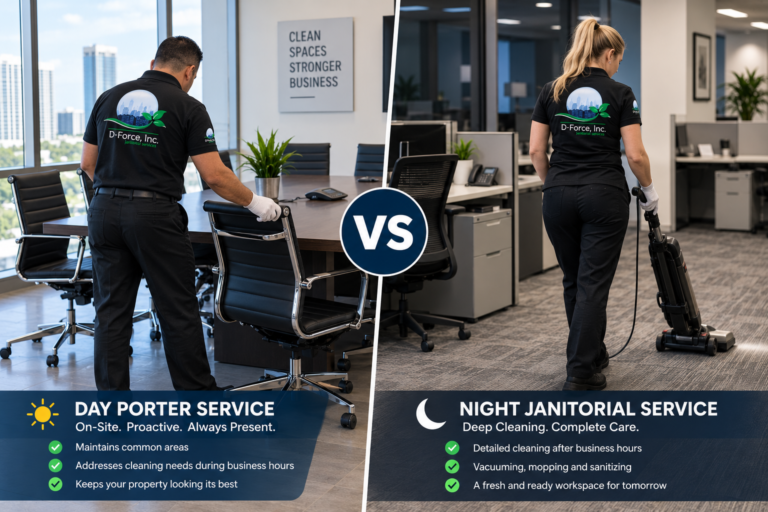
For these facilities, day porter services can complement nightly janitorial cleaning.
The day porter maintains important areas while the building is occupied, while the nighttime cleaning crew performs more detailed work after employees, tenants, and visitors leave.
A janitorial provider that can offer different service schedules gives property managers more flexibility as the building’s needs change.
11. Professional Floor Care Capabilities
Commercial floors represent a significant part of a property’s appearance and require more than routine sweeping or mopping.
Property managers should determine whether their janitorial provider understands both daily floor maintenance and periodic floor care.
Depending on the flooring material, this may include:
Carpet cleaning
Floor scrubbing
Buffing
Polishing
Stripping and waxing
Periodic deep cleaning
A preventive floor maintenance schedule can help address wear and buildup before the flooring reaches the point where major corrective work is required.
12. Flexibility as the Property Changes
The cleaning program that works today may not be the right program six months from now.
A new tenant may move in. Employee numbers may increase. A previously unused area may become active. Building hours may change. A new common area may open.
A professional janitorial company should be able to adjust the cleaning plan when these changes occur.
Property managers should periodically review service frequency and priorities with their cleaning provider instead of assuming the original schedule will remain appropriate forever.
13. Price Should Be Evaluated Together With Value
Price is obviously an important consideration when selecting a commercial cleaning company.
However, the lowest monthly proposal is not always the lowest-cost solution.
Consider the management time required when cleaning is inconsistent.
If property managers repeatedly need to report missed tasks, respond to tenant complaints, request corrective cleaning, or supervise basic janitorial responsibilities, those activities have a cost.
A better question is:
How much management attention will this janitorial company require after the contract begins?
A reliable cleaning provider should allow property managers to spend less time managing cleaning problems and more time managing the property.
The Right Janitorial Company Should Make Property Management Easier
Ultimately, property managers are not simply purchasing cleaning labor.
They are purchasing consistency, communication, accountability, and a professional standard for the building.
A strong janitorial relationship should become predictable.
The cleaning company understands the property. Employees understand their responsibilities. Management knows who to contact. Problems are addressed quickly. Cleaning frequencies are adjusted when necessary.
That is when janitorial service becomes more than another vendor relationship—it becomes part of an effective building maintenance program.
Professional Janitorial Services for Commercial Properties in Miami
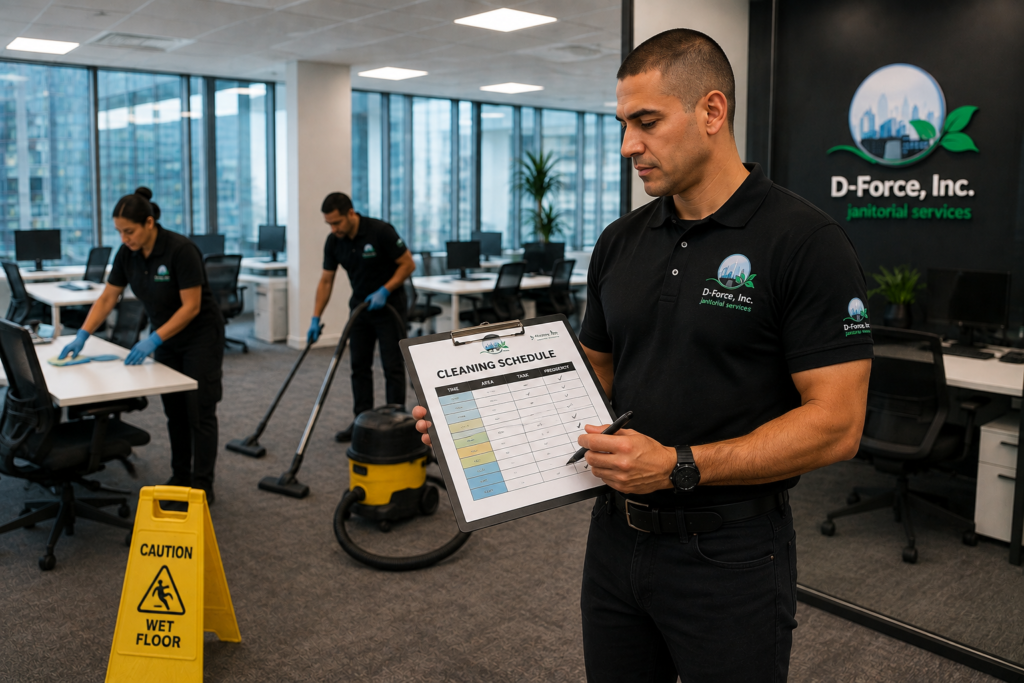
At D-Force Janitorial, we understand that property managers need more than a generic cleaning checklist.
Every commercial facility has different traffic patterns, operating hours, flooring, restrooms, common areas, and cleaning priorities. Our approach is to understand those requirements and develop a practical cleaning program around the property.
Our services can include commercial cleaning, nightly janitorial services, office cleaning, day porter services, restroom maintenance, common-area cleaning, and professional floor care.
Whether a property requires several cleaning visits per week, nightly service, daytime maintenance, or a combination of services, the cleaning program should support the way the building actually operates.
Looking for a Reliable Janitorial Partner in Miami?
If you manage a commercial property and are evaluating your current cleaning program, look beyond the list of tasks on the proposal.
Consider consistency, supervision, communication, security procedures, flexibility, and how much management time the service requires.
The right janitorial company should not give you more things to manage.
It should give you fewer.
Contact D-Force Janitorial today to request a free estimate and discuss a customized janitorial cleaning program for your commercial property in Miami.
Call us now: (786)7096307