Call us (786) 7096307

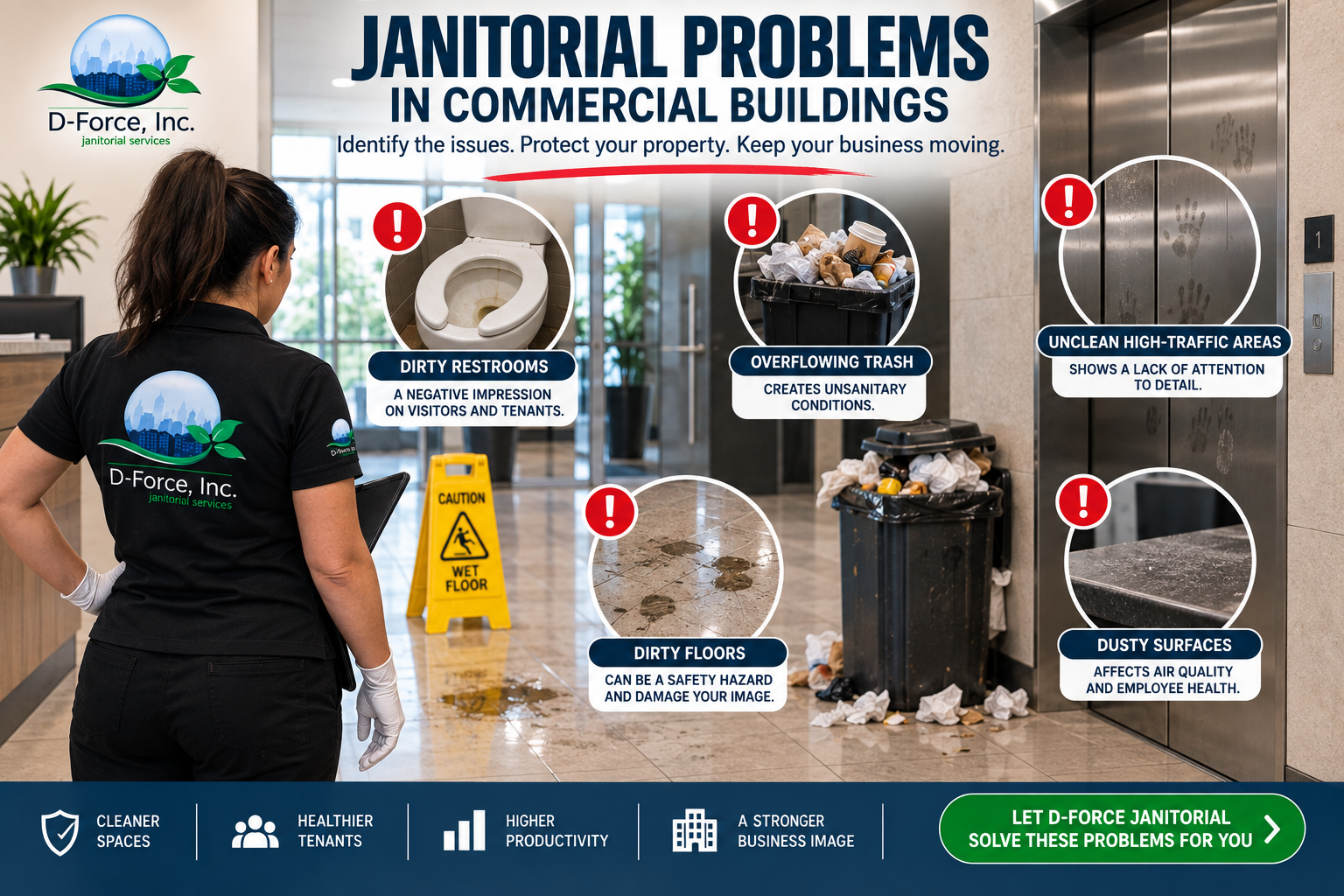
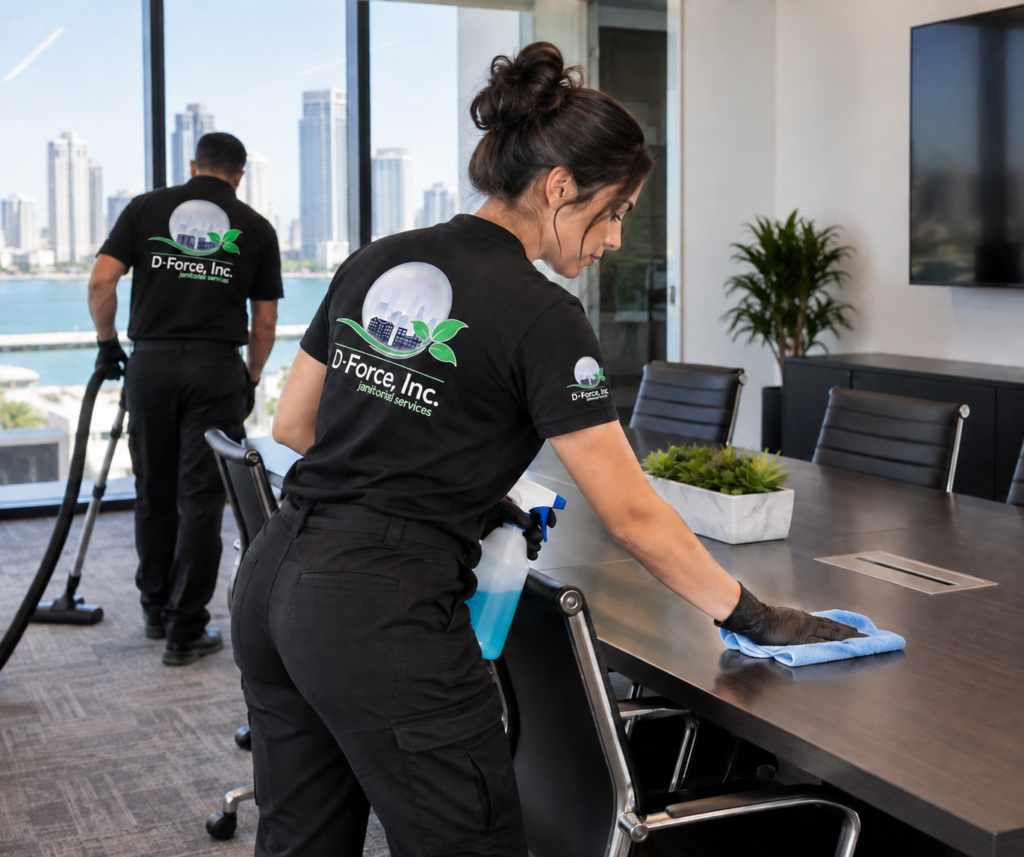
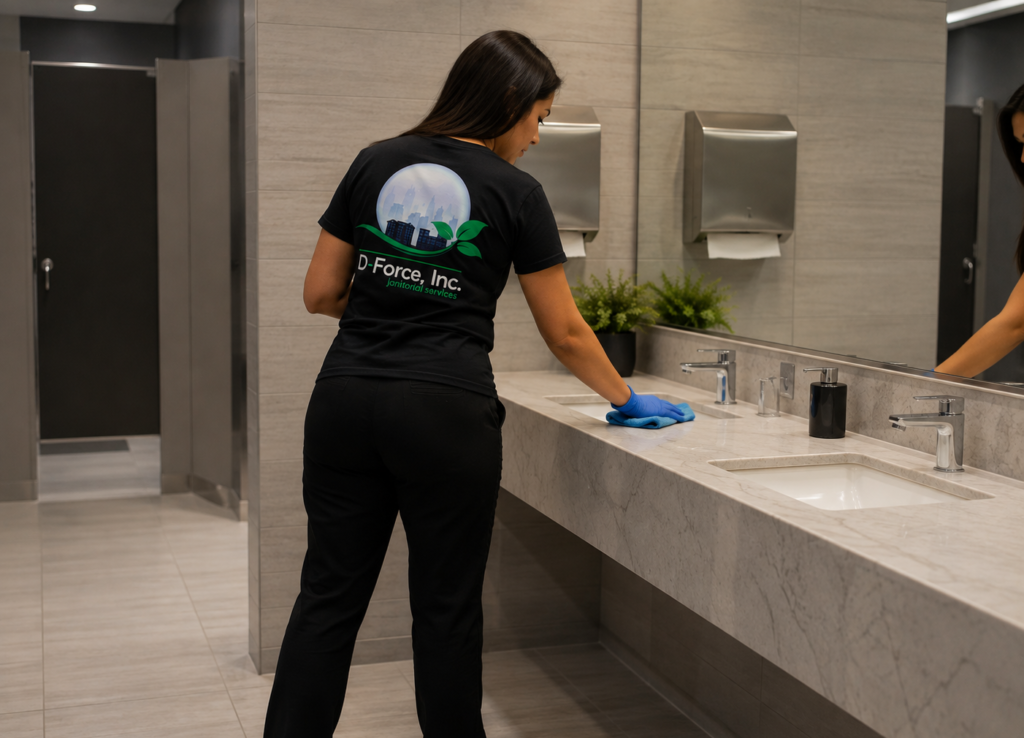
A commercial building can look perfectly clean in the morning and develop noticeable cleaning problems only a few hours later.
Restrooms receive constant use. Employees fill trash containers. Visitors bring dirt through entrances. Elevators collect fingerprints. Breakrooms become busy. Spills happen. Floors experience continuous foot traffic.
For business owners, property managers, and facility managers, the challenge is not simply getting a building clean. The real challenge is keeping cleaning standards consistent day after day.
Many recurring janitorial problems are not caused by one bad cleaning night. They are often signs that the cleaning schedule, responsibilities, supervision, or communication process does not match the actual needs of the property.
Here are some of the most common janitorial problems in commercial buildings—and practical ways to prevent them.
1. Restrooms Look Clean in the Morning but Not in the Afternoon
This is one of the most common problems in high-traffic commercial properties.
The nighttime janitorial team may clean the restroom properly, but by midday, hundreds of people may have used it.
Trash accumulates. Counters become wet. Paper products run low. Floors need attention. Soap dispensers may need to be refilled.
The problem may not be poor nighttime cleaning.
The cleaning frequency may simply be too low for the amount of restroom traffic.
How to Prevent It
Restroom maintenance should be based on usage rather than following the same schedule in every building.
High-traffic facilities may benefit from scheduled daytime inspections in addition to detailed nightly cleaning.
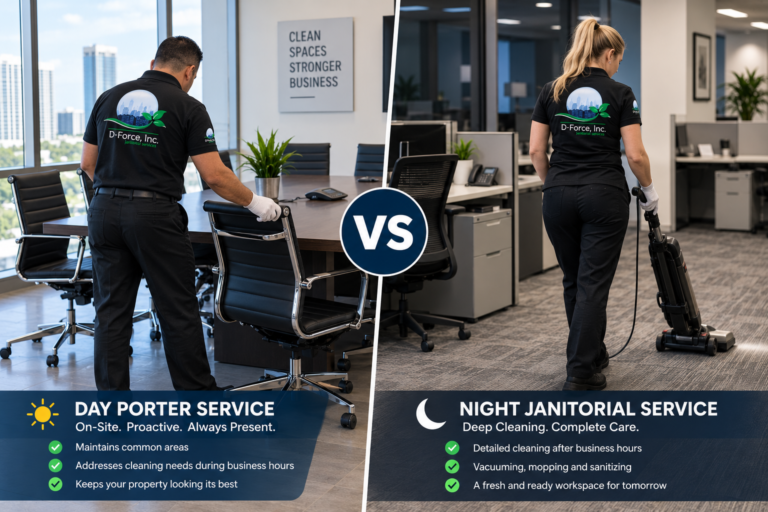
A day porter can check supplies, remove trash, address visible conditions, and report maintenance issues during operating hours.
This creates a simple system:
Night → Clean
Day → Inspect & Maintain
Night → Reset
2. Trash Containers Regularly Overflow
Overflowing trash can quickly make an otherwise clean commercial property appear poorly maintained.
If the same containers repeatedly become full before the next scheduled service, simply emptying them after a complaint does not solve the underlying problem.
The location may receive more traffic than originally expected, the container may be too small, or the collection frequency may be insufficient.
How to Prevent It
Identify which trash containers fill fastest and adjust the cleaning schedule accordingly.
High-volume locations such as breakrooms, entrances, conference areas, and shared spaces may need additional checks.
Cleaning frequency should reflect actual usage, not just a generic checklist.
3. Floors Never Seem to Stay Clean
Commercial floors experience constant wear.
Every person entering a building can bring dirt, sand, moisture, and debris inside. Entrances and main hallways typically experience significantly more exposure than private offices.
If all floors receive exactly the same maintenance frequency, high-traffic areas may begin to deteriorate visually much faster.
How to Prevent It
Create a floor maintenance program based on both flooring type and traffic.
Routine service may include vacuuming, sweeping, and mopping, while periodic maintenance can include carpet cleaning, machine scrubbing, buffing, polishing, or stripping and waxing when appropriate.
Entrance matting and daytime attention to high-traffic areas can also help control dirt before it travels deeper into the building.
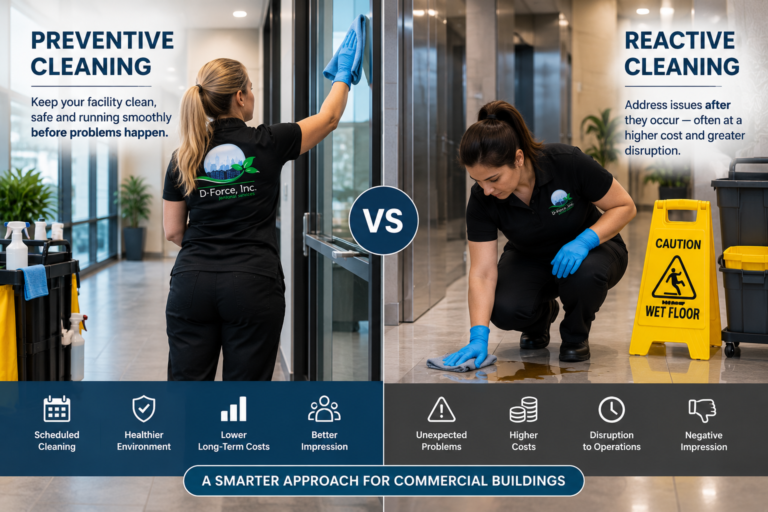
The goal is to move from corrective floor cleaning to preventive floor maintenance.
4. Entrance Glass Is Constantly Covered With Fingerprints
Entrances create one of the first impressions visitors have of a commercial property.
Unfortunately, entrance doors are also touched continuously.
A glass door can be cleaned perfectly at night and covered with fingerprints again by lunchtime.
This is another situation where increasing the nighttime cleaning effort may not solve the problem.
How to Prevent It
High-traffic entrance glass should be included in daytime inspections when necessary.
A day porter can spot-clean entrance doors and other highly visible glass surfaces without performing a complete glass cleaning every few hours.
This keeps the entrance presentable while using cleaning time efficiently.
5. Breakrooms and Kitchens Become a Recurring Problem
Commercial breakrooms can change quickly throughout the day.
Employees prepare food, use microwaves, make coffee, wash dishes, dispose of packaging, and use countertops and tables.
Even when the area receives nightly cleaning, daytime usage can create visible problems.
How to Prevent It
Define exactly what the janitorial company is responsible for.
The cleaning scope may include countertops, sinks, tables, floors, trash, accessible appliance surfaces, and other agreed-upon tasks.
More detailed services can be scheduled periodically.
Clear responsibilities are important because employee kitchens often create confusion about what belongs to the cleaning company and what remains the responsibility of employees.
6. The Same Areas Are Continually Missed
A corner behind a door.
The edge of a hallway.
A conference room that is not used every day.
A particular office.
A section of baseboard.
When the same areas are repeatedly missed, the problem may be less about cleaning ability and more about the system being used.
How to Prevent It
Use clearly defined cleaning checklists and frequencies.
Instead of relying entirely on what cleaners notice, divide responsibilities into categories such as:
Daily → Weekly → Monthly → Periodic
This ensures that lower-frequency tasks remain part of the cleaning program without requiring every task to be performed every night.
Supervisory inspections can also identify patterns before they become long-term problems.
7. Cleaning Quality Changes From Employee to Employee
One cleaner knows the building extremely well.
Another does not.
Suddenly, service quality changes depending on who is working that night.
This is a major challenge because commercial cleaning companies inevitably experience vacations, absences, schedule changes, and employee turnover.
A building should not depend entirely on one person’s memory.
How to Prevent It
The cleaning program should contain enough structure that another trained employee can understand the account.
That means having defined responsibilities, cleaning procedures, frequencies, building instructions, and supervision.
The goal should be:
Different employee. Same expectations. Consistent results.
8. Property Managers Spend Too Much Time Reporting Problems
This is one of the most expensive janitorial problems because the cost is often invisible.
A property manager notices a problem, takes a picture, contacts the cleaning company, explains what happened, waits for a response, and later verifies that the issue was corrected.
Ten minutes here and fifteen minutes there may not seem significant.
But when this happens repeatedly, management becomes part of the cleaning quality-control process.
How to Prevent It
The janitorial provider should have its own quality-control system.
Supervisors should inspect work, identify recurring issues, communicate with cleaning personnel, and make adjustments when necessary.
Property managers should certainly communicate concerns, but they should not need to function as daily cleaning supervisors.
A good janitorial program should reduce management workload, not increase it.
9. Problems Are Corrected but Never Prevented
A cleaning company can respond quickly to complaints and still have an ineffective system.
Why?
Because fixing the problem once does not prevent it from happening again.
If the same restroom, trash container, floor, or common area repeatedly requires corrective attention, something about the cleaning program probably needs to change.
How to Prevent It
Ask one additional question whenever a problem repeats:
Why does this keep happening?
Perhaps the frequency is wrong.
Maybe responsibilities are unclear.
The building’s traffic may have changed.
Additional training may be necessary.
The area might need daytime attention instead of only nighttime cleaning.
Finding the cause can be much more valuable than repeatedly treating the symptom.
10. Cleaning and Building Maintenance Problems Get Confused
Not everything that looks like a cleaning problem can be solved by cleaning.
A persistent restroom odor might involve a drain or plumbing issue. A recurring wet area may indicate a leak. Floor discoloration could involve damaged flooring rather than surface dirt. A broken soap dispenser needs repair or replacement, not additional cleaning.
If these distinctions are not communicated, cleaning employees may repeatedly work on a problem they cannot actually solve.
How to Prevent It
Establish a simple reporting process between the janitorial team and property management.
Cleaning employees are often inside areas of the building that management may not inspect every day.
When they notice unusual conditions, they should know how to report them.
A professional cleaning company does not need to become the building maintenance contractor.
But it should understand when something appears to be a maintenance issue rather than a cleaning issue.
11. The Cleaning Schedule Has Not Changed Even Though the Building Has
Commercial properties change.
A new tenant moves in.
More employees return to the office.
Visitor traffic increases.
Operating hours expand.
A previously unused conference area becomes busy.
But sometimes the janitorial schedule remains exactly the same.
Eventually, the cleaning program no longer matches the property.
How to Prevent It
Review the janitorial schedule periodically.
Property managers and cleaning supervisors should evaluate whether service frequencies still reflect actual building conditions.
Some areas may need additional attention.
Others may require less.
A customized cleaning program should evolve with the property instead of remaining frozen at the conditions that existed when the original contract was signed.
12. There Is No Clear Quality Standard
One of the biggest problems in commercial cleaning occurs when everyone has a different definition of “clean.”
The property manager expects one thing.
The cleaning employee assumes another.
The contract says something vague like “maintain common areas.”
That creates unnecessary disagreements.
How to Prevent It
A professional janitorial program should clearly define:
- Areas included in service
- Specific responsibilities
- Cleaning frequencies
- Periodic services
- Special instructions
- Quality-control procedures
- Communication responsibilities
When expectations are clearly established, performance becomes much easier to evaluate.
Most Janitorial Problems Are System Problems
It is easy to look at a dirty floor or overflowing trash container and assume the solution is simply:
“Clean it better.”
Sometimes that is true.
But recurring problems usually deserve a deeper look.
The real issue may involve frequency, staffing, traffic patterns, supervision, communication, unclear responsibilities, or a cleaning schedule that has not been updated.
This is why professional commercial cleaning should be treated as a program rather than a collection of individual cleaning tasks.
A good program asks:
What needs to be cleaned? → How often? → Who is responsible? → How is quality checked? → What changes when the building changes?
Those questions create consistency.
Professional Janitorial Services for Commercial Buildings in Miami
At D-Force Janitorial, we understand that every commercial property has different cleaning challenges.
A small professional office should not automatically receive the same cleaning program as a high-traffic multi-tenant building.
We focus on understanding how the property operates, identifying cleaning priorities, and developing a practical schedule based on actual facility needs.
Our services can include commercial cleaning, office cleaning, nightly janitorial services, day porter services, commercial restroom cleaning, common-area maintenance, and professional floor care.
For high-traffic facilities, daytime and nighttime services can also work together to provide more consistent coverage.
Are the Same Janitorial Problems Happening Over and Over?
If your property manager or facility manager is repeatedly reporting the same dirty restrooms, overflowing trash, neglected floors, missed areas, or inconsistent cleaning, simply correcting each individual problem may not be enough.
The cleaning program itself may need attention.
A well-designed janitorial plan should identify recurring problems, establish appropriate cleaning frequencies, create clear responsibilities, and adjust as the building changes.
Looking for professional commercial cleaning and janitorial services in Miami? Contact D-Force Janitorial for a free estimate. We can evaluate your facility’s cleaning needs and develop a customized janitorial program designed around the way your commercial property actually operates.
Call us now: (786)7096307