Call us (786) 7096307

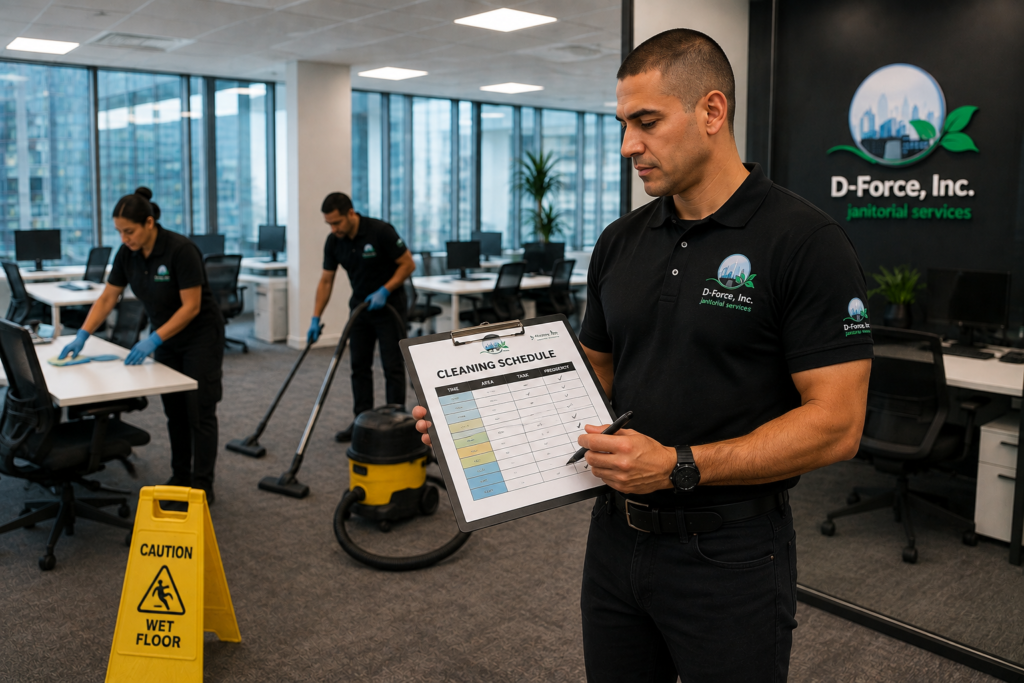
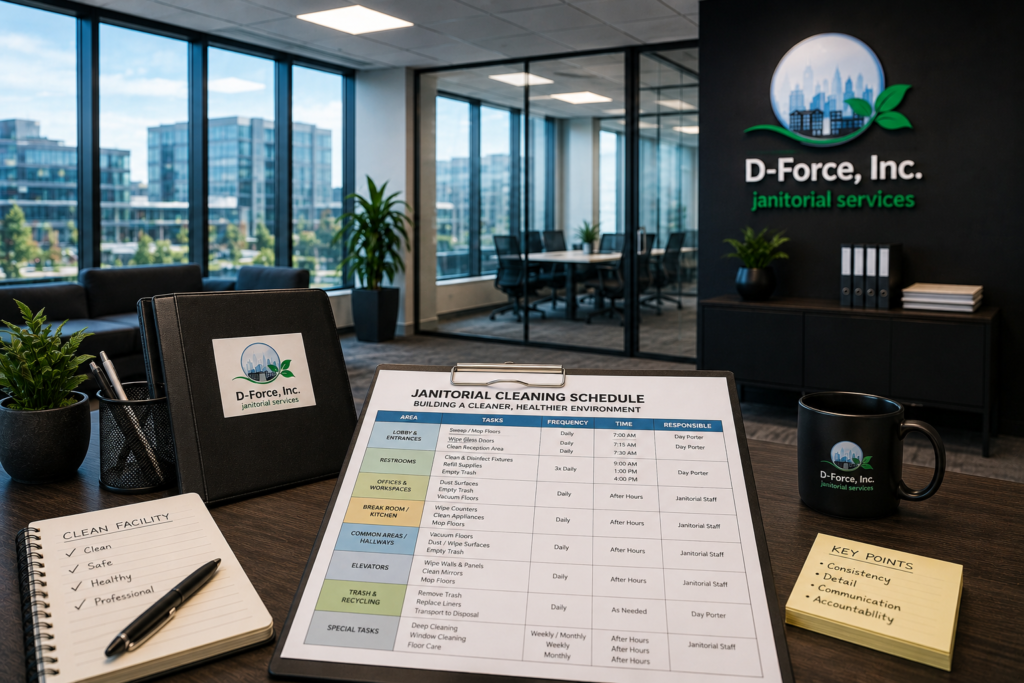
Keeping a commercial facility consistently clean requires more than hiring a cleaning company and providing a list of tasks. One of the most important parts of an effective janitorial program is determining what needs to be cleaned, how often it should be cleaned, and which areas require the most attention.
A cleaning schedule that works for a small professional office may not be appropriate for a busy multi-tenant building, school, showroom, or high-traffic commercial property.
The right janitorial cleaning schedule should be based on how your facility actually operates.
Here is how businesses and property managers can build a cleaning schedule that provides consistent results without over-cleaning low-traffic areas or neglecting the areas that matter most.
Start With Your Facility’s Traffic
One of the first factors to consider is foot traffic.
Instead of treating every area equally, divide your facility into high-, medium-, and low-traffic zones.
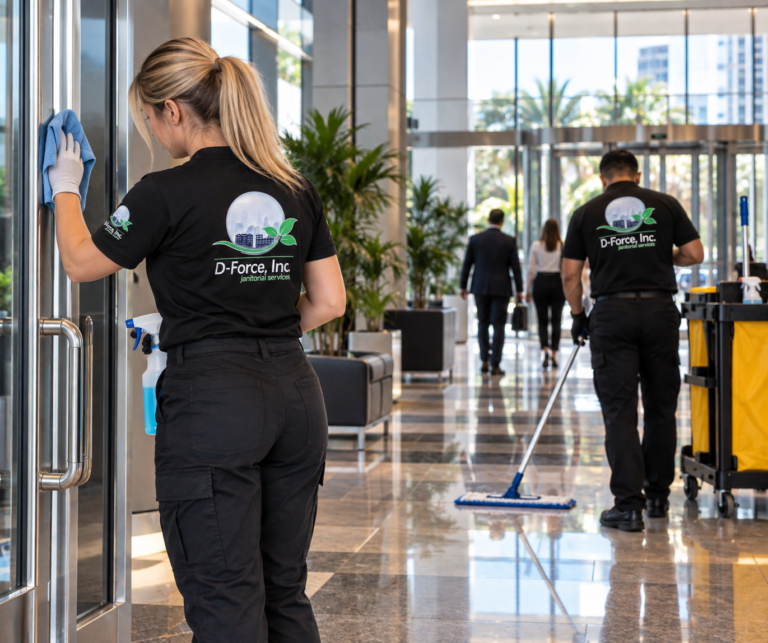
High-traffic areas may include entrances, lobbies, elevators, restrooms, breakrooms, and main hallways. These areas usually require daily attention and, in some facilities, multiple inspections throughout the day.
Medium-traffic areas may include conference rooms, secondary hallways, shared workspaces, and certain office areas.
Low-traffic areas could include private offices, storage rooms, or spaces that are only occasionally used.
This simple classification helps determine where cleaning labor should be concentrated.
Determine Which Tasks Need Daily Attention
Some janitorial tasks should normally be completed every service day because they directly affect the appearance and functionality of the facility.
These may include:
- Emptying trash and recycling
- Cleaning and disinfecting restrooms
- Restocking restroom supplies
- Vacuuming high-traffic carpeted areas
- Sweeping and mopping hard floors
- Cleaning entrances and glass doors
- Maintaining breakrooms and kitchens
- Cleaning elevators
- Addressing visible spills, fingerprints, and debris
For high-traffic commercial properties, some of these tasks may need to be performed more than once per day.
That does not necessarily mean the entire building needs to be cleaned repeatedly. It means the cleaning schedule should respond to the areas receiving the greatest use.
JANITORIAL CLEANING SCHEDULE AT A GLANCE
| FACILITY AREA | DAILY | WEEKLY | MONTHLY / PERIODIC |
|---|---|---|---|
| Restrooms | ✓ | Deep Detail | — |
| Entrances & Lobby | ✓ | Detail Cleaning | Floor Care |
| Trash & Recycling | ✓ | — | — |
| Breakrooms & Kitchens | ✓ | Detail Cleaning | Deep Cleaning |
| Elevators | ✓ | Detail Cleaning | — |
| High-Traffic Floors | ✓ | Machine Maintenance* | Floor Care* |
| Offices & Workspaces | Based on Use | ✓ | Detail Dusting |
| Interior Glass | Spot Clean | ✓ | Full Detail |
| Baseboards & Corners | As Needed | ✓ / Biweekly | Detail Cleaning |
| Carpets | Vacuum | Spot Treatment | Professional Cleaning* |
DAILY → Maintain
WEEKLY → Detail
MONTHLY/PERIODIC → Protect & Restore
Frequency depends on flooring type, traffic, facility requirements, and condition.
Add Weekly Detail Cleaning
Daily janitorial service should maintain the property, but certain tasks do not necessarily need to be completed every night.
Weekly cleaning can focus on areas that require more detailed attention.
This might include detailed dusting, cleaning office furniture, removing buildup from corners and edges, cleaning interior glass, addressing baseboards, and providing additional attention to conference rooms or other shared spaces.
Separating routine cleaning from detailed cleaning can make the janitorial program more efficient.
Instead of trying to perform every possible task every night, the cleaning team follows a structured rotation.
Plan Periodic Floor Maintenance
Commercial floors deserve their own maintenance schedule.
Daily vacuuming, sweeping, and mopping are important, but they are only one part of professional floor care.
Depending on the flooring material, traffic level, and condition, a facility may periodically require services such as carpet cleaning, floor scrubbing, buffing, polishing, or stripping and waxing.
Entrances and main hallways may require more frequent attention because they receive significantly more traffic than private offices.
The key is to perform floor maintenance before the condition of the floor requires major corrective work.
A preventive schedule can be more practical than waiting until floors visibly look neglected.
Consider Your Restroom Traffic
Restrooms should not automatically receive the same schedule in every building.
A restroom serving ten employees has very different requirements from one serving hundreds of employees, tenants, customers, and visitors.
For busy commercial properties, cleaning the restroom once at night may not be enough.
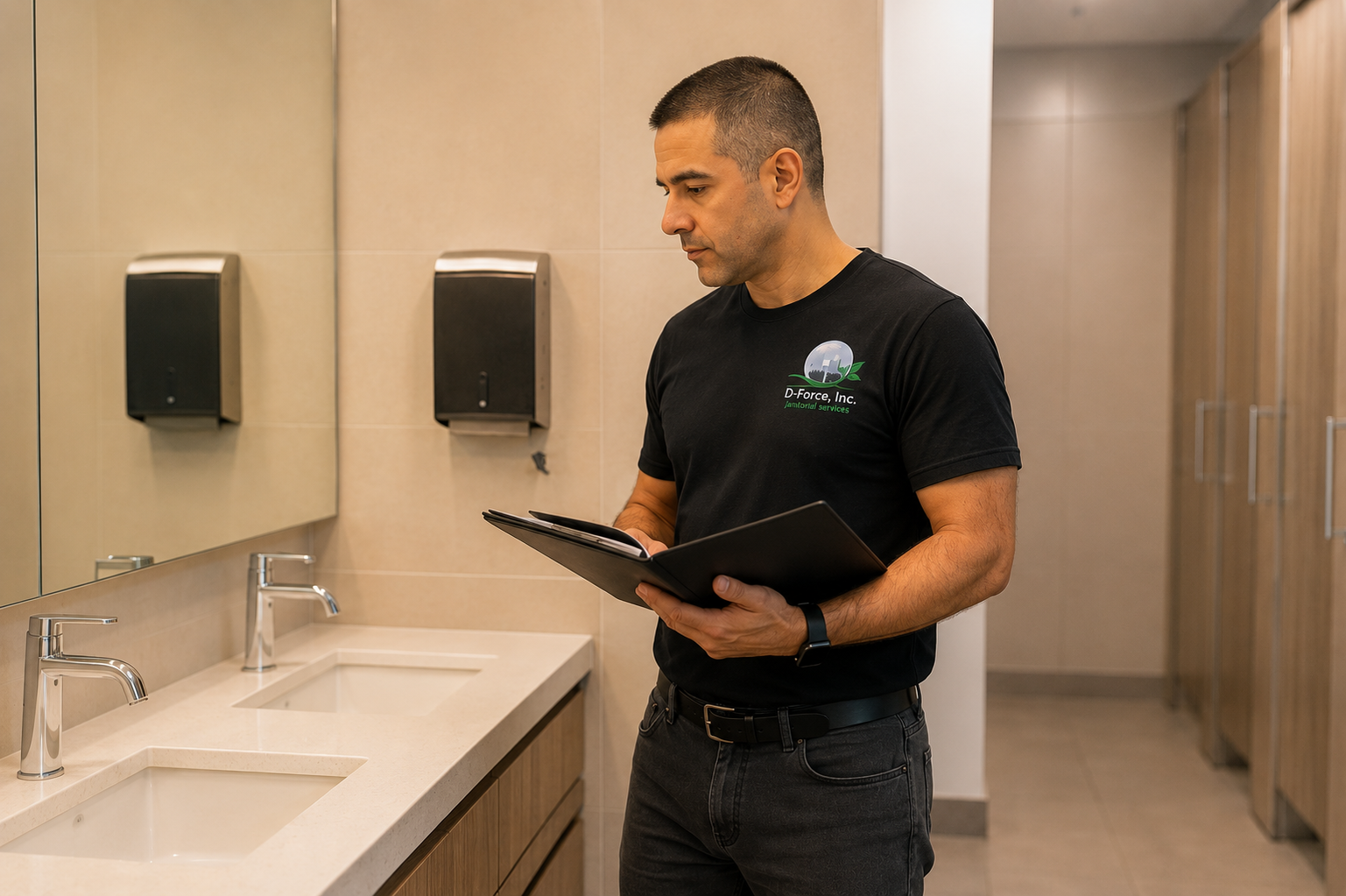
Restroom maintenance during operating hours can include checking paper products and soap, removing trash, wiping sinks and counters, addressing visible problems, and maintaining the overall appearance of the area.
A nighttime janitorial team can then perform the more complete cleaning and disinfection.
This is where combining day porter services with nightly janitorial cleaning can be particularly effective.
Decide Between Daytime and After-Hours Cleaning
The operating schedule of the facility should also influence the janitorial program.
Traditional nightly janitorial services work well for many offices and commercial buildings because cleaners can vacuum, mop, remove trash, and clean workspaces without interfering with employees or customers.
However, buildings with continuous traffic may also need daytime maintenance.
A day porter can help maintain entrances, elevators, restrooms, common areas, trash containers, and other high-traffic spaces while the facility is occupied.
The goal is not to choose between daytime and nighttime cleaning simply because one sounds better.
The goal is to determine when cleaning is actually needed.
Build the Schedule Around Frequency, Not Just Tasks
One common mistake is creating a long cleaning checklist without defining frequency.
For example, a contract may say:
“Clean lobby.”
But what does that actually mean?
Should the lobby floor be cleaned nightly? Should entrance glass be spot-cleaned during the day? Should furniture be dusted weekly? Should the floor receive machine maintenance periodically?
A professional cleaning schedule should answer these questions.
Every important task should have an appropriate frequency:
Daily → Weekly → Monthly → Quarterly → As Needed
This makes responsibilities clearer for both the client and the janitorial company.
Review and Adjust the Cleaning Schedule
A commercial cleaning schedule should not remain unchanged forever.
Facilities change.
A company may hire more employees. A previously unused floor may become occupied. Visitor traffic may increase. A new tenant may move into the building. Seasonal weather may cause additional dirt and moisture near entrances.
For these reasons, the cleaning program should be reviewed periodically.
Property managers and cleaning supervisors should identify areas receiving more or less traffic and adjust the schedule when necessary.
This is one of the biggest advantages of a customized janitorial program.
The Best Cleaning Schedule Is Not Necessarily the Biggest
More cleaning does not automatically mean better cleaning.
The most effective program uses available cleaning time intelligently.
High-traffic areas should receive greater attention. Low-traffic areas can follow an appropriate rotation. Periodic maintenance should be scheduled before problems become expensive restoration projects.
A well-designed janitorial schedule creates a balance between cleanliness, consistency, efficiency, and cost.
Professional Janitorial Services in Miami
At D-Force Janitorial, we understand that every commercial facility has different cleaning requirements.
A small office, multi-tenant commercial building, school, showroom, or high-traffic property should not automatically receive the same cleaning program.
We evaluate factors such as facility size, traffic patterns, operating hours, restrooms, flooring, common areas, and cleaning priorities to help develop a practical service schedule.
Our services can include commercial cleaning, office cleaning, nightly janitorial services, day porter services, restroom maintenance, common-area cleaning, and professional floor care.
Whether your property requires service several times per week, nightly cleaning, daytime maintenance, or a combination of services, the objective should always be the same: create a cleaning schedule that matches the way your facility is actually used.
Does Your Current Janitorial Schedule Match Your Facility?
If some areas of your building are constantly requiring additional attention while others are being cleaned more frequently than necessary, your cleaning schedule may need to be adjusted.
A customized janitorial program can help focus cleaning resources where they provide the greatest value.
Looking for professional janitorial services in Miami? Contact D-Force Janitorial today for a free estimate and let us help you build a customized commercial cleaning schedule based on the specific needs of your facility.
Call us now: (786)7096307