Call us (786) 7096307

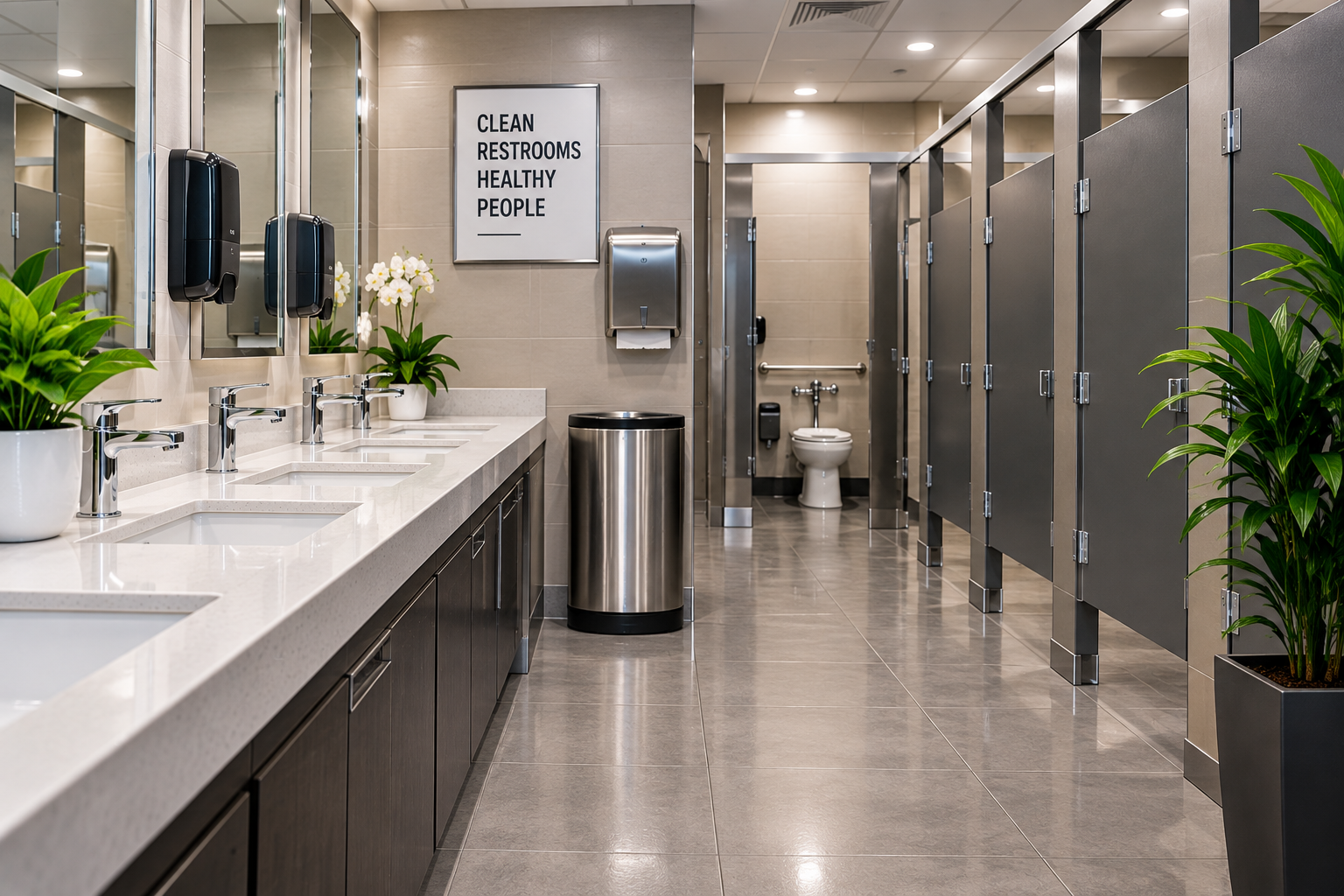
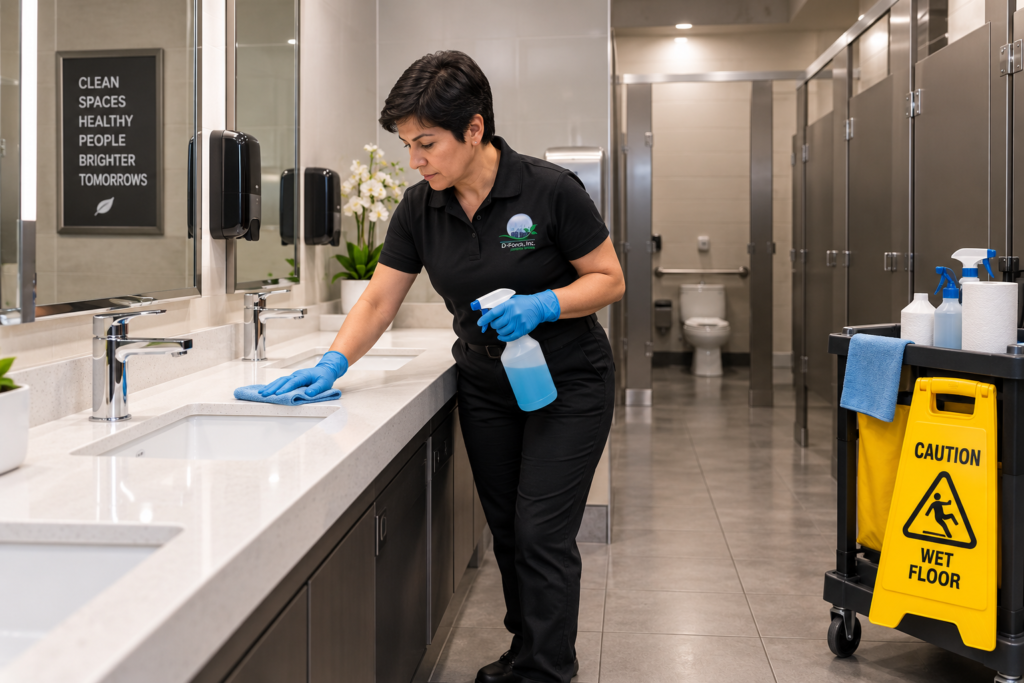
When evaluating the cleanliness of a commercial building, people may notice the lobby, floors, windows, or reception area first. But there is one space that can quickly change their perception of the entire property: the restroom.
A commercial restroom may represent only a small portion of a building’s total square footage, but it can require a significant amount of janitorial attention. High usage, limited space, multiple high-touch surfaces, moisture, waste, and the constant need for supplies make restrooms one of the most demanding areas to maintain.
For property managers and business owners, restroom cleaning should not simply be another item on a janitorial checklist. It should be a clearly defined part of the cleaning program with the appropriate tasks, frequencies, inspections, and responsibilities.
Here is why.
1. Restrooms Can Influence the Perception of the Entire Property
Imagine walking into a commercial building with a beautiful lobby, clean floors, and professional offices—and then entering a poorly maintained restroom.
That single experience can affect how a visitor perceives the entire facility.
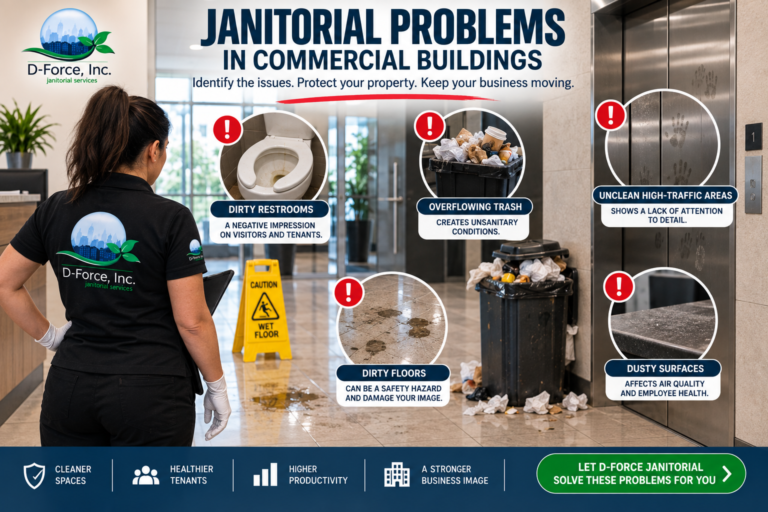
Dirty sinks, overflowing trash, empty soap dispensers, unpleasant odors, fingerprints, or neglected floors can suggest that building maintenance is inconsistent, even when other areas are being properly cleaned.
This makes restroom maintenance more than a cleaning issue.
It is part of the property’s overall presentation.
For offices, multi-tenant buildings, showrooms, schools, and other commercial facilities, consistently maintained restrooms can contribute to a more professional experience for employees, tenants, customers, and visitors.
2. Restroom Cleaning Frequency Should Be Based on Usage
One of the biggest mistakes in commercial cleaning is assuming every restroom should follow the same schedule.
A restroom used by a small office staff has very different cleaning requirements from one serving a busy commercial building throughout the day.
The right frequency depends on factors such as:
Number of employees
Visitor traffic
Operating hours
Number of restroom fixtures
Number of restrooms in the building
Peak usage periods
Type of commercial facility
A low-traffic restroom may be adequately maintained through scheduled janitorial service, while a heavily used restroom may require inspections and attention several times during the business day.
The important principle is simple:
Restroom cleaning frequency should follow usage—not just the clock.
3. Cleaning and Restocking Should Work Together
A restroom can be visually clean and still create a poor experience if essential supplies are missing.
Toilet paper, hand soap, paper towels, and other products should be monitored according to the facility’s needs.
This is why supply checks should be incorporated into the janitorial program rather than treated as a separate responsibility.
For high-traffic facilities, waiting until the nightly cleaning crew arrives may not be practical. Supplies may need to be checked periodically throughout operating hours.
A structured restroom program should clearly identify who checks supplies, when inspections occur, and how additional products are stored and replenished.
4. High-Touch Surfaces Need Consistent Attention
Commercial restrooms contain numerous surfaces that are repeatedly touched throughout the day.
These may include:
Door handles
Faucet handles
Soap dispensers
Stall doors and locks
Toilet and urinal fixtures
Countertops
Paper towel dispensers
Hand dryer controls
These surfaces should be included in routine restroom cleaning procedures.
A professional janitorial program should define which surfaces are cleaned and disinfected and how frequently the work is performed based on facility requirements and usage.
5. Floors Require Special Attention
Restroom floors face conditions that are different from many other areas of a commercial building.
Moisture, tracked-in dirt, paper debris, and frequent foot traffic can quickly affect their appearance.
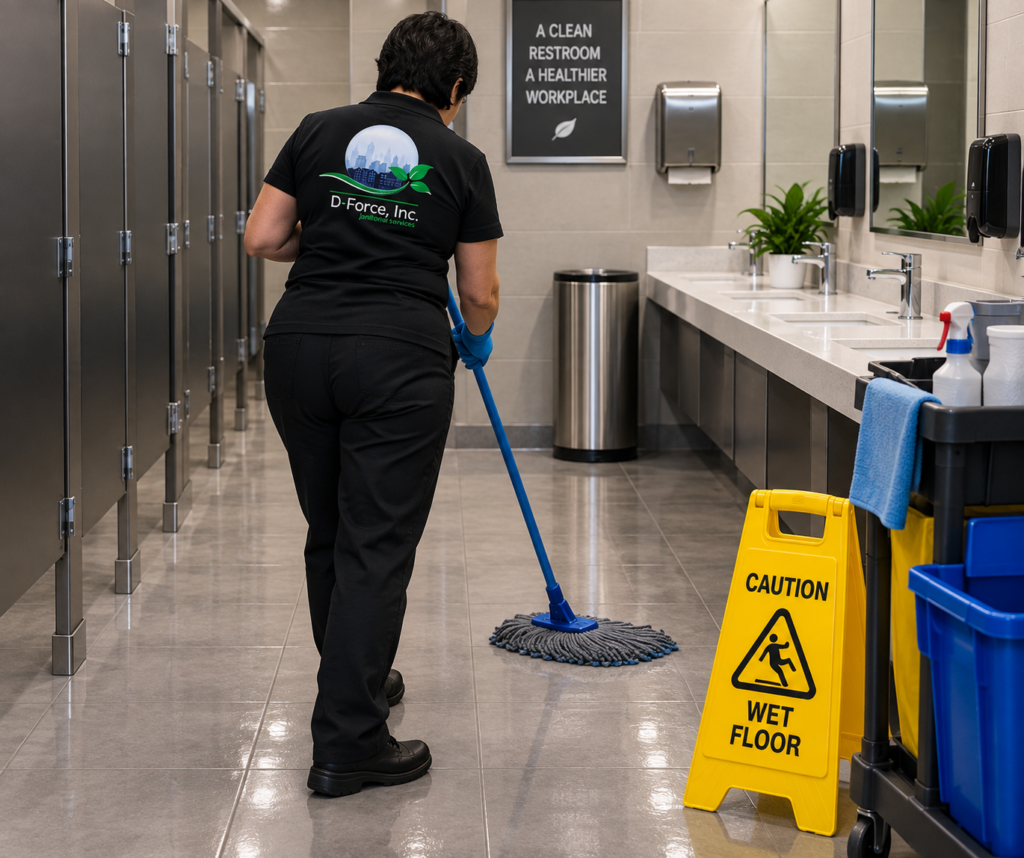
Regular sweeping and mopping should therefore be part of the restroom cleaning schedule.
Cleaning procedures should also help prevent cross-contamination between restrooms and other areas of the facility. For example, janitorial teams can use dedicated or color-coded cleaning tools and follow established procedures for restroom cleaning.
Wet floor signs and appropriate safety procedures should also be used whenever floor conditions require them.
6. Odor Should Be Addressed at the Source
Using fragrance alone is not a substitute for proper restroom cleaning.
Persistent restroom odors may be related to waste containers, floors, fixtures, drains, urinals, toilets, or areas that are not receiving enough detailed cleaning.
A professional approach focuses first on identifying and cleaning the source.
This is an important distinction between simply making a restroom smell different and actually maintaining it properly.
If an odor continues despite thorough cleaning, the cleaning team should communicate the issue to property management because it may require maintenance rather than additional janitorial work.
7. Details Matter More Than Many People Realize
Restroom cleaning should go beyond toilets and sinks.
Over time, smaller areas can affect the overall appearance of the space.
These may include:
Partitions
Corners and edges
Baseboards
Doors
Mirrors
Dispensers
Fixtures
Walls near high-touch areas
Areas behind or around toilets and urinals
Some of these tasks may not require the same frequency as routine cleaning.
This is where a combination of daily maintenance and scheduled detail cleaning becomes valuable.
Routine cleaning maintains the restroom. Periodic detail cleaning addresses buildup and areas that require additional attention.
8. Day Porter Services Can Help High-Traffic Facilities
For some commercial properties, nightly restroom cleaning is simply not enough.
Consider a restroom that is thoroughly cleaned at night but then serves hundreds of people the following day.
By the afternoon, trash may have accumulated, supplies may be low, counters may need attention, and the restroom may no longer reflect the standard established the previous evening.
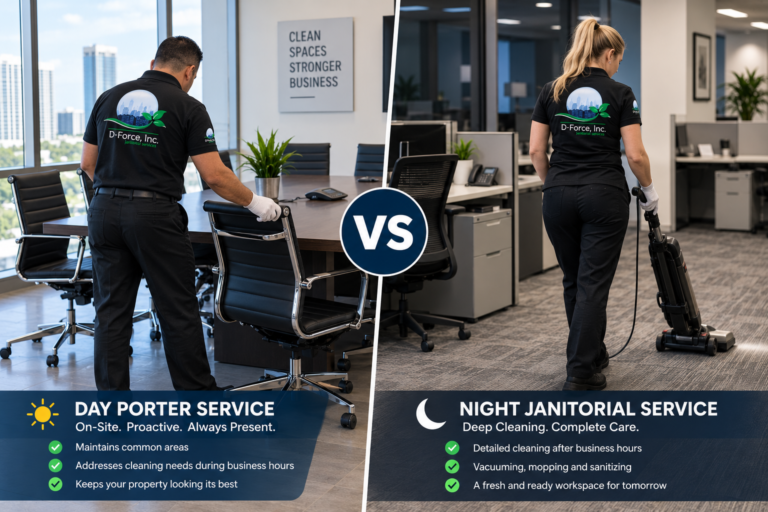
In these situations, day porter services can provide an additional layer of maintenance.
A day porter may inspect restrooms during business hours, restock supplies, remove trash, address visible cleaning needs, and report maintenance problems.
Then, after business hours, the nightly janitorial team can perform the more complete scheduled cleaning.
For high-traffic commercial facilities, these two services can work together rather than replace one another.
9. Restroom Inspections Create Accountability
A good commercial restroom program should not depend exclusively on someone noticing a problem.
Scheduled inspections can create a more consistent system.
For example, a high-traffic facility might establish restroom checks at specific intervals during operating hours.
The inspection can verify conditions such as:
Supplies → Trash → Sinks → Toilets → Floors → Overall Appearance
This creates a repeatable process and makes it easier to identify patterns.
If one restroom repeatedly needs attention earlier than expected, the cleaning frequency can be adjusted instead of continuing with a schedule that does not match actual usage.
10. Cleaning Teams Should Report Maintenance Problems
Janitorial employees spend significant time throughout a commercial property and may notice problems that others do not.
In restrooms, they might encounter a leaking faucet, malfunctioning toilet, loose dispenser, clogged drain, damaged partition, or another issue outside the cleaning company’s responsibility.
A professional cleaning team should have a process for communicating these observations to management.
The janitorial company does not need to become the plumbing or maintenance contractor.
But recognizing the difference between a cleaning problem and a maintenance problem can save time and prevent repeated attempts to solve the wrong issue.
11. A Restroom Program Should Be Customized
There is no universal restroom cleaning schedule that works for every commercial facility.
A professional janitorial company should consider the property’s traffic, operating hours, number of users, layout, and expectations before establishing the service frequency.
Some facilities may need nightly cleaning.
Others may need several cleaning visits per week.
High-traffic buildings may require nightly cleaning plus multiple daytime inspections.
The objective should not be to clean more simply for the sake of cleaning more.
The objective is to provide the right level of service at the right frequency.
Restroom Cleaning Is a Small Area With a Big Impact
Commercial restrooms demonstrate an important principle of professional janitorial service:
The importance of an area is not determined by its square footage.
A relatively small restroom can require more frequent attention than a much larger private office because it receives more traffic and has different maintenance requirements.
An effective commercial cleaning program recognizes these differences and allocates cleaning resources accordingly.
That means prioritizing high-use spaces, establishing realistic cleaning frequencies, monitoring supplies, performing detail cleaning, and adjusting the schedule when building conditions change.
Professional Commercial Restroom Cleaning in Miami
At D-Force Janitorial, we understand that commercial restroom maintenance is an important part of a complete janitorial program.
Every property has different requirements, so we focus on developing cleaning schedules based on factors such as facility traffic, operating hours, restroom usage, common areas, and other cleaning priorities.
Our services can include commercial restroom cleaning, office cleaning, nightly janitorial services, day porter services, common-area cleaning, commercial floor care, and customized janitorial programs.
For facilities that require attention throughout the business day, daytime restroom inspections and maintenance can also be incorporated into the overall cleaning plan.
Does Your Restroom Cleaning Schedule Match Your Building’s Traffic?
If restrooms consistently run out of supplies, trash accumulates before the next service, or property management receives repeated complaints during the day, the problem may not be the cleaning itself.
The cleaning frequency may not match the actual usage of the facility.
A professional janitorial program should identify that difference and adjust accordingly.
Looking for professional commercial cleaning and janitorial services in Miami? Contact D-Force Janitorial today for a free estimate and let us develop a customized cleaning program based on the specific needs and traffic patterns of your commercial facility.
Call us now: (786)7096307