Call us (786) 7096307

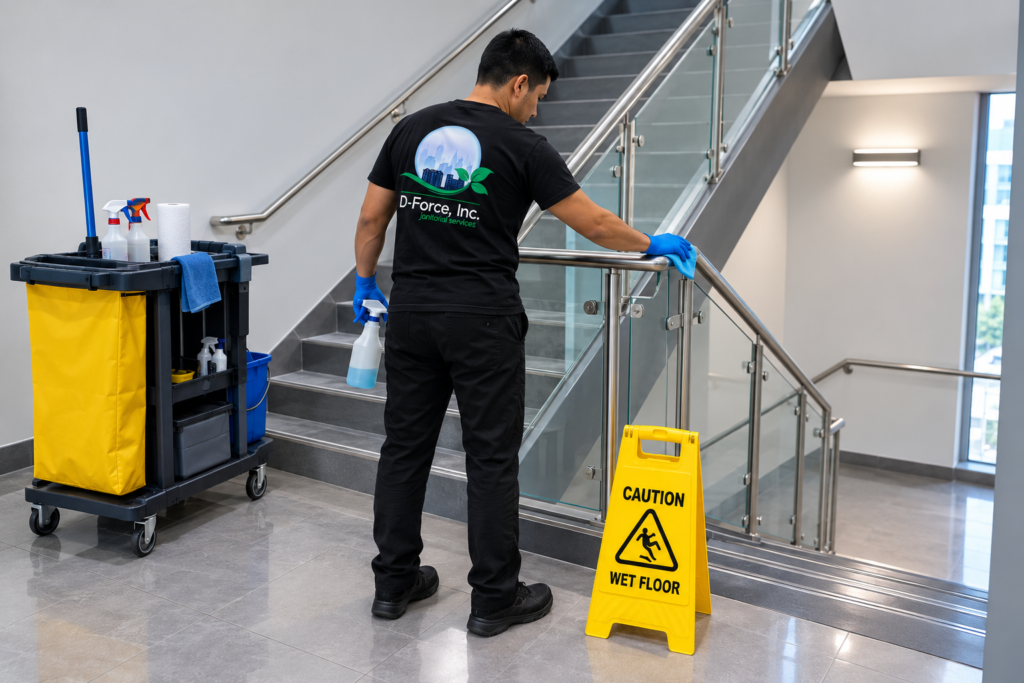
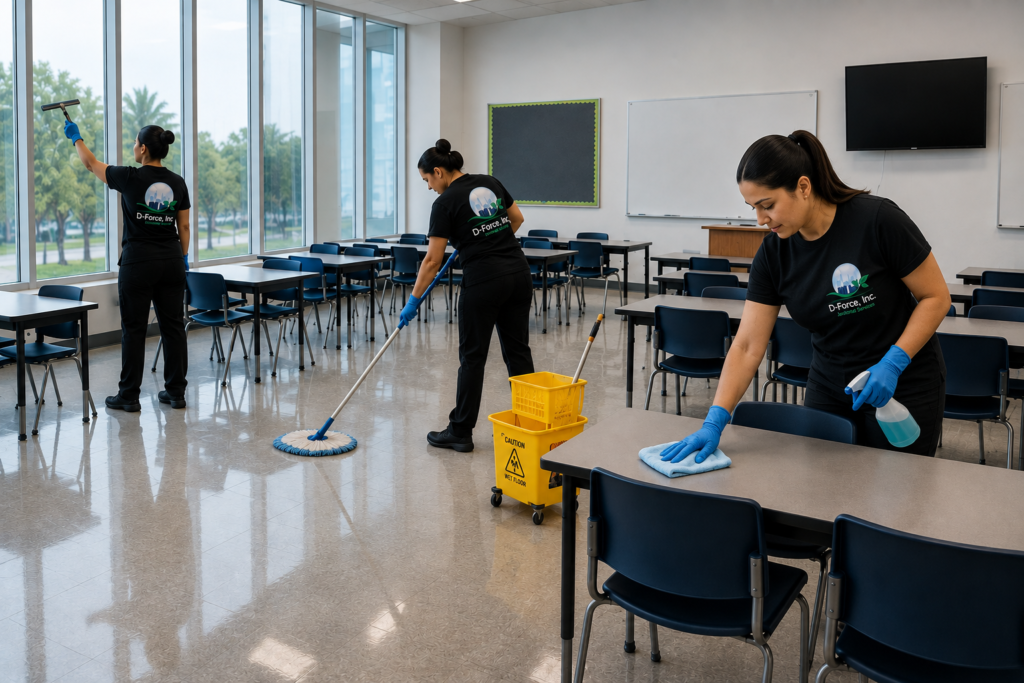
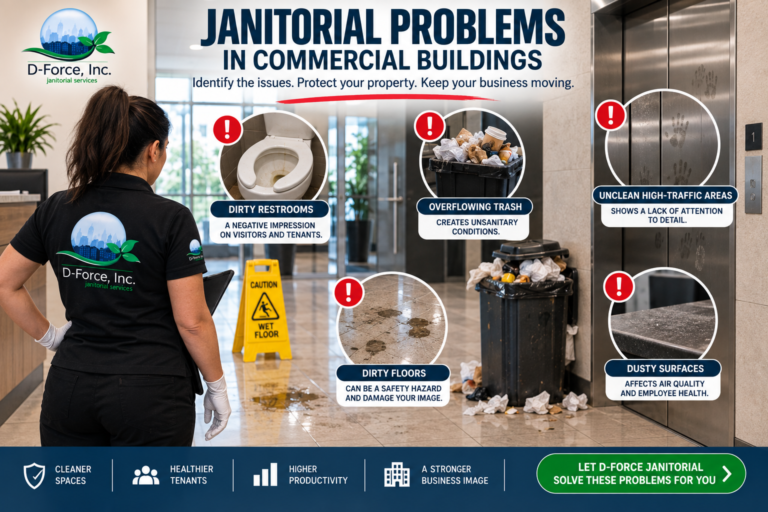
Many commercial buildings follow a simple cleaning strategy without realizing it: wait until something looks dirty, then clean it.
A restroom receives attention after someone complains. A carpet is professionally cleaned after stains become noticeable. A lobby floor receives extra care only after it begins to lose its appearance. Trash becomes a priority when containers are already full.
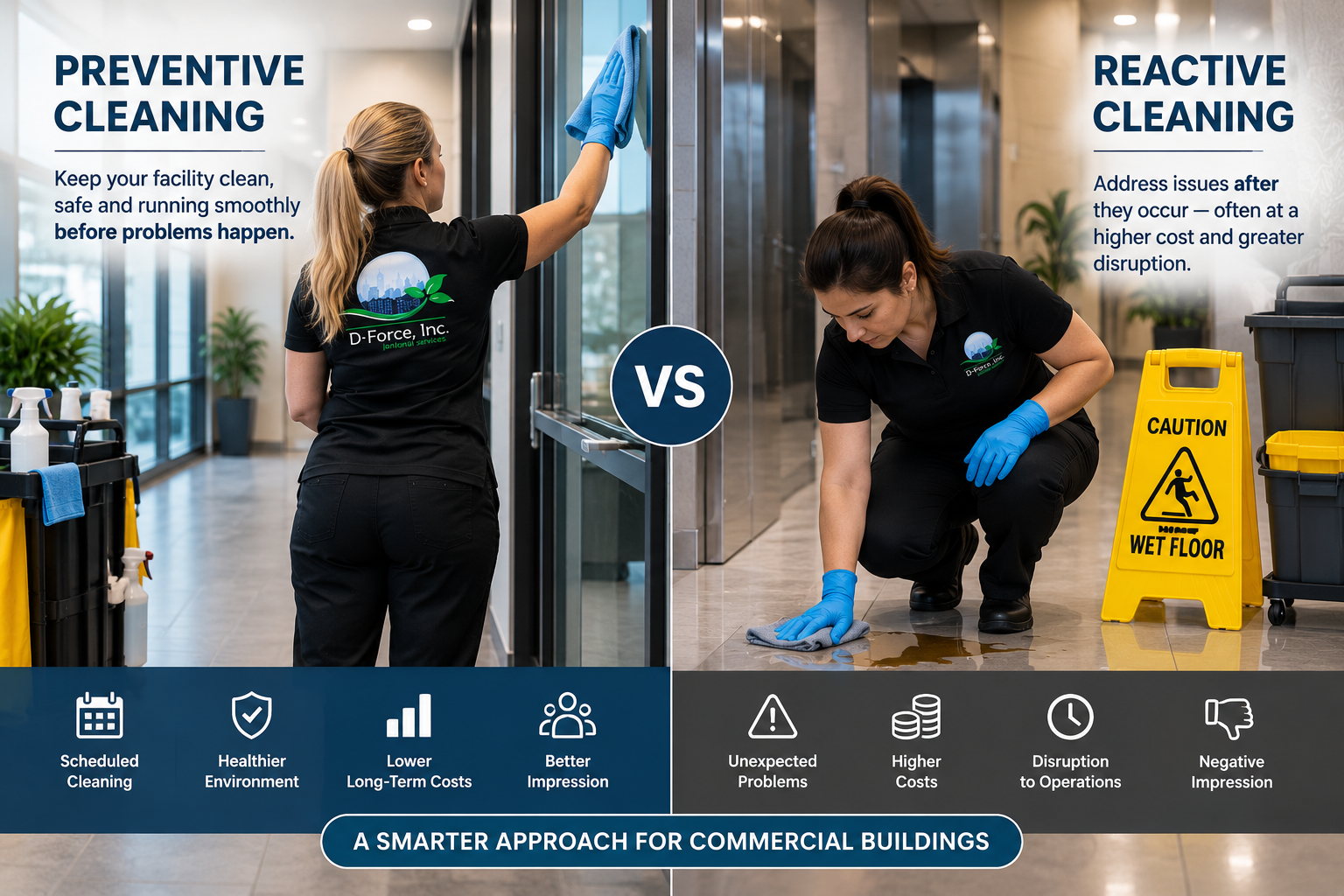
This is reactive cleaning.
While some unexpected cleaning situations will always occur, relying primarily on a reactive approach can make commercial building maintenance less predictable and more difficult to manage.
There is another approach: preventive cleaning.
Preventive cleaning uses planned schedules, traffic patterns, inspections, and periodic maintenance to address cleaning needs before they become larger problems.
For property managers and business owners, understanding the difference between these two approaches can help create a more consistent and efficient janitorial program.
What Is Reactive Cleaning?
Reactive cleaning happens in response to an existing condition.
Something becomes visibly dirty, a tenant reports a problem, a restroom runs out of supplies, or management notices that an area needs additional attention.
Examples might include:
Cleaning a spill after it occurs
Responding to an overflowing trash container
Restocking restroom supplies after they run out
Deep cleaning a floor after significant buildup appears
Addressing fingerprints after entrance glass becomes noticeably dirty
Cleaning a breakroom after complaints
Scheduling carpet cleaning only after heavy staining becomes visible
Some reactive cleaning is unavoidable. Spills, unexpected traffic, weather, events, and other situations cannot always be predicted.
The problem begins when reactive cleaning becomes the primary cleaning system.
What Is Preventive Cleaning?
Preventive cleaning takes the opposite approach.
Instead of asking, “What needs to be cleaned right now?” the cleaning program asks:
“What should we maintain now so it does not become a larger problem later?”
This requires understanding how the commercial facility operates.
A preventive janitorial program considers factors such as building traffic, restroom usage, flooring materials, operating hours, seasonal conditions, common areas, employee population, and visitor activity.
Tasks are then assigned appropriate frequencies.
For example, entrance floors may be cleaned every service day because they receive heavy traffic. Restroom supplies may be inspected during the day instead of waiting for dispensers to become empty. Carpet cleaning or floor maintenance may be scheduled periodically rather than waiting until the flooring looks severely neglected.
The goal is not necessarily to clean more.
The goal is to clean at the right time.
Preventive Cleaning vs. Reactive Cleaning
The difference becomes clearer when we compare the two approaches:
| Reactive Cleaning | Preventive Cleaning |
|---|---|
| Clean when problems appear | Clean according to planned needs |
| Respond to complaints | Reduce preventable complaints |
| Restock when supplies run out | Inspect supplies before they run out |
| Address heavy floor buildup | Schedule periodic floor maintenance |
| Focus on visible problems | Consider traffic and usage patterns |
| Correct missed conditions | Follow defined frequencies |
| Management identifies problems | Cleaning team proactively monitors areas |
A professional commercial cleaning program will always include some reactive work, but preventive cleaning should provide the foundation.
1. Preventive Cleaning Creates More Consistent Results
One of the biggest problems with reactive cleaning is inconsistency.
A facility may look excellent one day and neglected the next because cleaning decisions depend on what someone notices.
Preventive cleaning creates a baseline.
Restrooms are serviced according to usage. Trash is removed on schedule. Floors receive routine maintenance. High-touch surfaces are included in cleaning procedures. Common areas receive attention based on traffic.
This makes the condition of the building more predictable.
For property managers, consistency is extremely valuable because it reduces the need to repeatedly identify the same cleaning problems.
2. High-Traffic Areas Should Be Identified Before Problems Develop
Not every area of a commercial building needs the same level of attention.
A private office used by one employee does not usually require the same cleaning frequency as a lobby serving hundreds of people.
Preventive cleaning identifies these differences.
High-traffic areas often include:
Entrances
Lobbies
Elevators
Restrooms
Main hallways
Breakrooms
Shared workspaces
Waiting areas
These spaces can be assigned more frequent cleaning or inspection schedules.
Meanwhile, lower-traffic areas can follow an appropriate rotation.
This helps direct janitorial labor toward the areas where it provides the greatest value.
3. Commercial Floors Benefit From Preventive Maintenance
Floor care is one of the clearest examples of the difference between preventive and reactive cleaning.
Dirt and debris enter commercial buildings every day. In high-traffic areas, that material is repeatedly walked across the floor.
Routine vacuuming, sweeping, and mopping help control everyday soil, but certain flooring materials also require periodic maintenance.
Depending on the flooring type and condition, this may include:
Carpet cleaning
Floor scrubbing
Buffing
Polishing
Stripping and waxing
Periodic deep cleaning
A reactive approach waits until the floor looks bad.
A preventive approach establishes maintenance intervals based on traffic, flooring type, and actual condition.
This can help maintain a more consistent professional appearance and reduce the need for emergency corrective work.
4. Restrooms Are Ideal for Preventive Cleaning
Commercial restrooms should not be managed exclusively through complaints.
Imagine a restroom being cleaned thoroughly every evening but receiving heavy traffic throughout the following business day.
By mid-afternoon, trash may be accumulating and supplies may be running low.
Waiting for someone to complain is reactive.
A preventive approach might establish inspections during operating hours to check:
Supplies → Trash → Sinks → Fixtures → Floors → Overall Condition
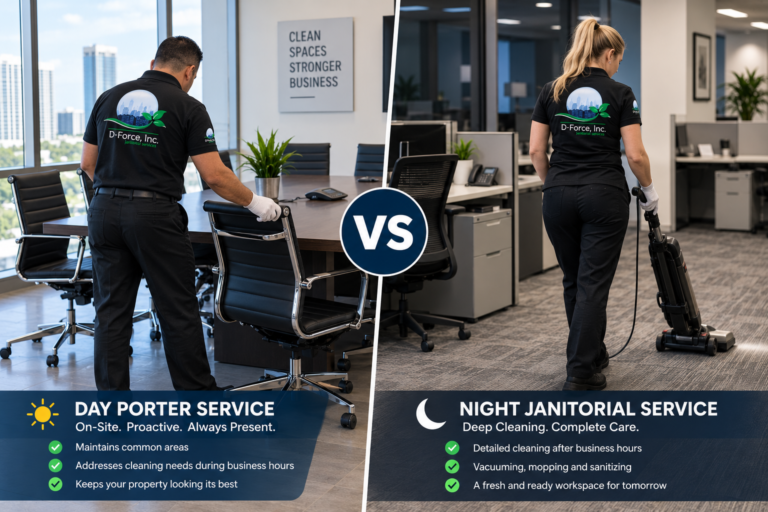
For high-traffic commercial facilities, a day porter can perform these inspections and address routine cleaning needs during business hours.
The nightly janitorial team can then complete the more detailed scheduled cleaning.
5. Preventive Cleaning Can Reduce Management Time
There is another cost that is easy to overlook: management attention.
When a cleaning program is primarily reactive, property managers or employees often become responsible for identifying problems.
They notice the dirty entrance.
They report the restroom.
They send pictures.
They contact the cleaning company.
They follow up.
They verify that the problem was corrected.
Over time, this creates unnecessary administrative work.
A professional janitorial program should reduce the amount of time management spends directing basic cleaning activities.
The cleaning system should identify predictable needs before management has to report them.
6. Preventive Does Not Mean Over-Cleaning
This is an important distinction.
Preventive cleaning does not mean cleaning every surface every day.
That would often be inefficient.
Instead, tasks should be divided into appropriate frequencies:
Daily → Weekly → Monthly → Quarterly → As Needed
For example, trash removal and restroom cleaning may be daily tasks, while detailed dusting, baseboards, certain glass surfaces, carpet cleaning, or specialized floor maintenance may follow different schedules.
A well-designed program avoids both under-cleaning and unnecessary over-cleaning.
7. Inspections Make Preventive Cleaning More Effective
Schedules are important, but conditions should still be monitored.
Commercial facilities change constantly.
Employee numbers increase. A new tenant moves into the building. Visitor traffic changes. Weather brings additional moisture and dirt into entrances. A previously quiet area becomes heavily used.
Periodic inspections help determine whether the original cleaning schedule still matches the building.
If one restroom repeatedly requires attention before the scheduled cleaning, its frequency may need to increase.
If another area consistently remains clean, its schedule may be adjusted.
This makes the cleaning program more efficient over time.
8. Day Porter and Nightly Cleaning Can Work Together
For high-traffic facilities, preventive cleaning often works best when daytime and nighttime responsibilities complement each other.
A day porter can monitor conditions while the building is occupied, including restrooms, entrances, elevators, trash, spills, and common areas.
After business hours, a nightly janitorial team can perform more detailed cleaning without disrupting employees, tenants, customers, or visitors.
This creates two different layers of service:
Daytime → Maintain and Monitor
Nighttime → Clean and Reset
For busy commercial properties, this combination can provide a much more consistent result than relying exclusively on one cleaning period.
9. Communication Is Part of Preventive Maintenance
Cleaning employees spend significant time throughout a commercial property and may notice conditions that management has not yet identified.
For example, they may see a leaking fixture, damaged dispenser, unusual floor condition, recurring spill, or area receiving unexpectedly high traffic.
Not every problem is the cleaning company’s responsibility.
However, communicating unusual conditions to property management can help distinguish between a janitorial issue and a building maintenance issue.
That type of communication makes the cleaning team more useful to the overall operation of the facility.
Build a Cleaning Program Instead of a Cleaning Reaction
The biggest difference between preventive and reactive cleaning is not a particular product, machine, or cleaning technique.
It is the system behind the service.
Reactive cleaning asks:
“What is dirty?”
Preventive cleaning asks:
“What needs attention, how frequently, and why?”
That second question leads to better planning.
A professional janitorial program should identify high-traffic areas, establish cleaning frequencies, schedule periodic services, monitor changing conditions, and adjust the plan when necessary.
Unexpected cleaning situations will still happen.
But they should be exceptions—not the entire strategy.
Professional Preventive Janitorial Services in Miami
At D-Force Janitorial, we believe commercial cleaning should be based on the actual needs of the property rather than simply responding when something looks dirty.
Every facility has different traffic patterns, operating hours, flooring, restrooms, common areas, and cleaning priorities.
That is why we focus on developing practical cleaning schedules based on how each property is actually used.
Our services can include commercial cleaning, office cleaning, nightly janitorial services, day porter services, commercial restroom cleaning, common-area maintenance, and professional floor care.
Depending on the facility, service may be scheduled several times per week, nightly, during business hours, or through a combination of daytime and nighttime cleaning.
Is Your Cleaning Program Preventive—or Mostly Reactive?
If your property management team regularly needs to report overflowing trash, low restroom supplies, dirty entrances, neglected floors, or other recurring problems, the issue may not simply be individual cleaning tasks.
Your janitorial schedule may not match the actual needs of your facility.
Moving from reactive cleaning toward a preventive cleaning program can help create more consistent results, clearer responsibilities, and a commercial property that is easier to manage.
Looking for professional commercial cleaning and janitorial services in Miami? Contact D-Force Janitorial today for a free estimate and let us develop a customized cleaning program based on your property’s traffic, schedule, and specific maintenance needs.
Call us now: (786)7096307